
Hypomelanotic Disorder Market Outlook
Thelansis’s “Hypomelanotic Disorder Market Outlook, Epidemiology, Competitive Landscape, and Market Forecast Report – 2022 To 2032″ covers disease overview, epidemiology, drug utilization, prescription share analysis, competitive landscape, clinical practice, regulatory landscape, patient share, market uptake, market forecast, and key market insights under the potential Hypomelanotic Disorder treatment modalities options for eight major markets (USA, Germany, France, Italy, Spain, UK, Japan, and China).
Hypomelanotic Disorder Overview
The hypomelanotic disorder is a term used to describe various skin conditions that result in the loss of pigmentation due to the reduction or absence of melanocytes, which are responsible for producing pigments in the skin. Some common types of hypomelanotic disorders are vitiligo, ash leaf spots, and idiopathic guttate hypomelanosis. The symptoms of these disorders differ depending on the specific condition. It can be either congenital or acquired. Congenital hypomelanotic disorders include albinism, piebaldism, and hypomelanosis ito. Acquired hypopigmented conditions may result from normal ageing, environmental factors such as cumulative sun exposure, nutritional deficiencies, inflammatory causes, vascular causes and autoimmune causes. The common differential diagnoses for hypopigmented macules include P. alba, P. versicolor, IGH, vitiligo, PMH, post-inflammatory inflammation, and halo nevus. The treatment for hypomelanotic disorders varies depending on the type of disorder. Treatment for vitiligo may include corticosteroids, tacrolimus, pimecrolimus, ultraviolet B and PUVA therapy, self-tanning creams, and skin grafting.
- Italy has estimated a prevalence of 1 case per 7,540 births and 1 in 82,000 within the total population.
Geography Covered:
North America- the United States and Canada
Europe- EU5 (Germany, France, Italy, Spain, and the United Kingdom)
Other countries- Japan & China
Study Period: 2022-2032
Current Clinical Practice and Treatment Algorithm
This section of the study covers country-specific current clinical practice, the standard of care, and significant limitations around addressing the unmet needs. Retrospective analysis and bench-marking of clinical study outcomes are presented in terms of Pre-treatment & post-treatment clinical and demographic patient characteristics. Essentially, this section will cover the evolution of the current competitive landscape and its impact on the future treatment paradigm.
KOL Insights:
KOLs across 8 MM markets from the center of Excellence/ Public/ Private hospitals participated in the study. Insights around current treatment landscape, epidemiology, clinical characteristics, future treatment paradigm, and Unmet needs
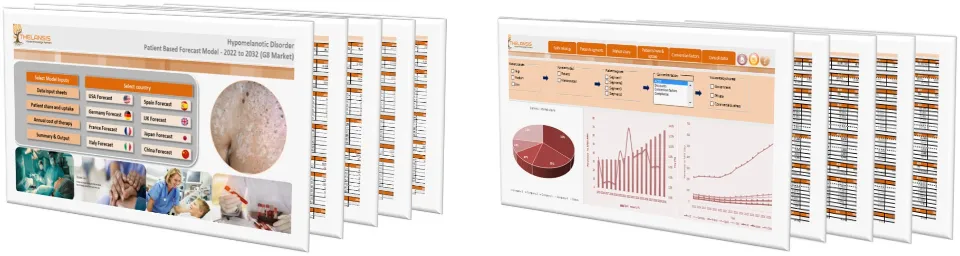
Market Forecast: Patient Based Forecast Model (MS. Excel Based Automated Dashboard)
– Data Inputs with sourcing
– Market Event and Product Event
– Country-specific Forecast Model
– Market uptake and patient share uptake
– Attribute Analysis
– Analog Analysis
– Disease burden and pricing scenario
– Summary and Insights
NPV/ IRR Calculator-
Optimization of cash flow/ revenue flow concerning all fixed and variable investments throughout the product development process. The rate of return on an investment is a critical indicator to ensure the profitability and break-even of the project.
Competitive Landscape:
The competitive landscape includes country-specific approved as well as pipeline therapies. Any asset/product-specific designation or review such as Orphan drug designation, Fast track, Priority Review, Breakthrough Therapy Designation, Rare Pediatric Disease Designation, and Accelerated Approval are tracked and supplemented with analyst commentary.
Clinical Trial Assessment-
Detailed clinical trial data analysis and critical product positioning include trial design, primary outcomes, secondary outcomes, dosing and schedules, inclusion and exclusion criteria, recruitment status and essentially covers the reported adverse events. Majorly the trial analysis helps determine the potential of the critical assets and their probable filing and launch date.
Unmet Medical Needs Overview-
This report presents the most important clinical unmet needs in the treatment, according to Thelansis research and analysis. Other essential unmet needs identified through our study include decreased cost burden on patients, improved administration convenience, and improved patient compliance.
Visit our social media pages:



Hypomelanotic Disorder Market Outlook
Thelansis’s “Hypomelanotic Disorder Market Outlook, Epidemiology, Competitive Landscape, and Market Forecast Report – 2022 To 2032″ covers disease overview, epidemiology, drug utilization, prescription share analysis, competitive landscape, clinical practice, regulatory landscape, patient share, market uptake, market forecast, and key market insights under the potential Hypomelanotic Disorder treatment modalities options for eight major markets (USA, Germany, France, Italy, Spain, UK, Japan, and China).
Hypomelanotic Disorder Overview
The hypomelanotic disorder is a term used to describe various skin conditions that result in the loss of pigmentation due to the reduction or absence of melanocytes, which are responsible for producing pigments in the skin. Some common types of hypomelanotic disorders are vitiligo, ash leaf spots, and idiopathic guttate hypomelanosis. The symptoms of these disorders differ depending on the specific condition. It can be either congenital or acquired. Congenital hypomelanotic disorders include albinism, piebaldism, and hypomelanosis ito. Acquired hypopigmented conditions may result from normal ageing, environmental factors such as cumulative sun exposure, nutritional deficiencies, inflammatory causes, vascular causes and autoimmune causes. The common differential diagnoses for hypopigmented macules include P. alba, P. versicolor, IGH, vitiligo, PMH, post-inflammatory inflammation, and halo nevus. The treatment for hypomelanotic disorders varies depending on the type of disorder. Treatment for vitiligo may include corticosteroids, tacrolimus, pimecrolimus, ultraviolet B and PUVA therapy, self-tanning creams, and skin grafting.
- Italy has estimated a prevalence of 1 case per 7,540 births and 1 in 82,000 within the total population.
Geography Covered:
North America- the United States and Canada
Europe- EU5 (Germany, France, Italy, Spain, and the United Kingdom)
Other countries- Japan & China
Study Period: 2022-2032
Current Clinical Practice and Treatment Algorithm
This section of the study covers country-specific current clinical practice, the standard of care, and significant limitations around addressing the unmet needs. Retrospective analysis and bench-marking of clinical study outcomes are presented in terms of Pre-treatment & post-treatment clinical and demographic patient characteristics. Essentially, this section will cover the evolution of the current competitive landscape and its impact on the future treatment paradigm.
KOL Insights:
KOLs across 8 MM markets from the center of Excellence/ Public/ Private hospitals participated in the study. Insights around current treatment landscape, epidemiology, clinical characteristics, future treatment paradigm, and Unmet needs
Market Forecast: Patient Based Forecast Model (MS. Excel Based Automated Dashboard)
– Data Inputs with sourcing
– Market Event and Product Event
– Country-specific Forecast Model
– Market uptake and patient share uptake
– Attribute Analysis
– Analog Analysis
– Disease burden and pricing scenario
– Summary and Insights
NPV/ IRR Calculator-
Optimization of cash flow/ revenue flow concerning all fixed and variable investments throughout the product development process. The rate of return on an investment is a critical indicator to ensure the profitability and break-even of the project.
Competitive Landscape:
The competitive landscape includes country-specific approved as well as pipeline therapies. Any asset/product-specific designation or review such as Orphan drug designation, Fast track, Priority Review, Breakthrough Therapy Designation, Rare Pediatric Disease Designation, and Accelerated Approval are tracked and supplemented with analyst commentary.
Clinical Trial Assessment-
Detailed clinical trial data analysis and critical product positioning include trial design, primary outcomes, secondary outcomes, dosing and schedules, inclusion and exclusion criteria, recruitment status and essentially covers the reported adverse events. Majorly the trial analysis helps determine the potential of the critical assets and their probable filing and launch date.
Unmet Medical Needs Overview-
This report presents the most important clinical unmet needs in the treatment, according to Thelansis research and analysis. Other essential unmet needs identified through our study include decreased cost burden on patients, improved administration convenience, and improved patient compliance.
Visit our social media pages:
Hypomelanotic Disorder Competitive Landscape
| S. no | Asset | Company | Stage |
| 1 | Ruxolitinib | Incyte Corporation | Phase 2 |
| 2 | Ritlecitinib | Pfizer | Phase 3 |
| 3 | Afamelanotide | Clinuvel, Inc. | Phase 2 |
| 4 | Upadacitinib | AbbVie | Phase 2 |
| 5 | AS012 | Sun Pharmaceutical Industries Limited | Phase 2 |
| 6 | Cerdulatinib | Dermavant Sciences GmbH | Phase 2 |
| 7 | ATI-50002 | Aclaris Therapeutics, Inc. | Phase 2 |
| 8 | Apremilast | Celgene | Phase 2 |
| 9 | Pirfenidone | Genentech, Inc. | Phase 2 |
| 10 | AMG 714 | Amgen | Phase 2 |
Continued…
KOLs across 8 MM market from the center of Excellence/ Public/ Private hospitals participated in the study. Insights around current treatment landscape, epidemiology, clinical characteristics, future treatment paradigm, and Unmet needs.
| COUNTRY | No. Of KOLs |
| USA | 17 |
| GERMANY | 4 |
| UK | 4 |
| SPAIN | 3 |
| FRANCE | 2 |
| ITALY | 3 |
| JAPAN | 3 |
| CHINA | 4 |
Hypomelanotic Disorder Market Forecast: Patient Based Forecast Model (MS. Excel Based Automated Dashboard)
Data Inputs with sourcing, Market Event, Product Event, Country specific Forecast Model, Market uptake and patient share uptake, Attribute Analysis, Analog Analysis, Disease burden, and pricing scenario, Summary, and Insights.
1. Hypomelanotic Disorder – Key Findings Summary |
| 1.1. Clinical findings |
| 1.1.1. Disease overview |
| 1.1.2. Therapeutic practices |
| 1.1.3. Future outlook |
| 1.2. Commercial findings |
| 1.2.1. Hypomelanotic Disorder market scenario 2022 |
| 1.2.2. Hypomelanotic Disorder market scenario 2025 |
| 1.2.3. Hypomelanotic Disorder market scenario 2032 |
2. Hypomelanotic Disorder Overview |
| 2.1. Disease Introduction |
| 2.2. Pathophysiology |
| 2.3. Signs and Symptoms |
| 2.4. Risk Factors |
| 2.5. Etiology |
| 2.6. Classification |
| 2.7. Pathogenesis |
| 2.8. Diagnosis |
| 2.9. Complications |
| 2.10. Treatment Algorithm |
| 2.10.1. Treatment in US (guidelines) |
| 2.10.2. Treatment in EU-5 (guidelines) |
| 2.10.3. Treatment in Japan (guidelines) |
| 2.10.4. Treatment in China (guidelines) |
| 2.11. Treatment Goals for Hypomelanotic Disorder |
| 2.12. Referral Patterns |
| 2.12.1. Referral Scenario in US |
| 2.12.2. Referral Scenario in EU-5 |
| 2.12.3. Referral Scenario in Japan |
| 2.12.4. Referral Scenario in China |
| 2.13. Hypomelanotic Disorder Prognosis |
| 2.14. Healthcare burden |
| 2.14.1. Healthcare burden in US |
| 2.14.2. Healthcare burden in EU-5 |
| 2.14.3. Healthcare burden in Japan |
| 2.14.4. Healthcare burden in China |
| 2.15. Unmet Needs in Hypomelanotic Disorder management |
| 2.16. Market Opportunity for Hypomelanotic Disorder |
| 2.17. KOL Comments on current and upcoming/expected treatment practices in Hypomelanotic Disorder |
3. Epidemiology |
| 3.1. Epidemiology Overview |
| 3.2. Epidemiology by Geography |
| 3.2.1. Hypomelanotic Disorder Epidemiology in US (2022-2032) |
| 3.2.1.1. Incidence of Hypomelanotic Disorder |
| 3.2.1.2. Diagnosed cases |
| 3.2.1.3. Treatable Patient Pool |
| 3.2.1.4. Epidemiology Trends |
| 3.2.2. Hypomelanotic Disorder Epidemiology in EU-5 (2022-2032) |
| 3.2.2.1. Incidence of Hypomelanotic Disorder |
| 3.2.2.2. Diagnosed cases |
| 3.2.2.3. Treatable Patient Pool |
| 3.2.2.4. Epidemiology Trends |
| 3.2.3. Hypomelanotic Disorder Epidemiology in Japan (2022-2032) |
| 3.2.3.1. Incidence of Hypomelanotic Disorder |
| 3.2.3.2. Diagnosed cases |
| 3.2.3.3. Treatable Patient Pool |
| 3.2.3.4. Epidemiology Trends |
| 3.2.4. Hypomelanotic Disorder Epidemiology in China (2022-2032) |
| 3.2.4.1. Incidence of Hypomelanotic Disorder |
| 3.2.4.2. Diagnosed cases |
| 3.2.4.3. Treatable Patient Pool |
| 3.2.4.4. Epidemiology Trends |
| 3.3. Epidemiology Trends (World-wide) |
4. Market Outlook |
| 4.1. US Hypomelanotic Disorder Market Forecast 2022-2032 |
| 4.1.1. Market Progression (Futuristic) |
| 4.1.2. Market Trends and Expectations |
| 4.1.2.1. Worst case scenario |
| 4.1.2.2. Base Case Scenario |
| 4.1.2.3. Best Case Scenario |
| 4.1.3. Drivers and Barriers |
| 4.2. UK Hypomelanotic Disorder Market Forecast 2022-2032 |
| 4.2.1. Market Progression (Futuristic) |
| 4.2.2. Market Trends and Expectations |
| 4.2.2.1. Worst case scenario |
| 4.2.2.2. Base Case Scenario |
| 4.2.2.3. Best Case Scenario |
| 4.2.3. Drivers and Barriers |
| 4.3. France Hypomelanotic Disorder Market Forecast 2022-2032 |
| 4.3.1. Market Progression (Futuristic) |
| 4.3.2. Market Trends and Expectations |
| 4.3.2.1. Worst case scenario |
| 4.3.2.2. Base Case Scenario |
| 4.3.2.3. Best Case Scenario |
| 4.3.3. Drivers and Barriers |
| 4.4. Germany Hypomelanotic Disorder Market Forecast 2022-2032 |
| 4.4.1. Market Progression (Futuristic) |
| 4.4.2. Market Trends and Expectations |
| 4.4.2.1. Worst case scenario |
| 4.4.2.2. Base Case Scenario |
| 4.4.2.3. Best Case Scenario |
| 4.4.3. Drivers and Barriers |
| 4.5. Italy Hypomelanotic Disorder Market Forecast 2022-2032 |
| 4.5.1. Market Progression (Futuristic) |
| 4.5.2. Market Trends and Expectations |
| 4.5.2.1. Worst case scenario |
| 4.5.2.2. Base Case Scenario |
| 4.5.2.3. Best Case Scenario |
| 4.5.3. Drivers and Barriers |
| 4.6. Spain Hypomelanotic Disorder Market Forecast 2022-2032 |
| 4.6.1. Market Progression (Futuristic) |
| 4.6.2. Market Trends and Expectations |
| 4.6.2.1. Worst case scenario |
| 4.6.2.2. Base Case Scenario |
| 4.6.2.3. Best Case Scenario |
| 4.6.3. Drivers and Barriers |
| 4.7. Japan Hypomelanotic Disorder Market Forecast 2022-2032 |
| 4.7.1. Market Progression (Futuristic) |
| 4.7.2. Market Trends and Expectations |
| 4.7.2.1. Worst case scenario |
| 4.7.2.2. Base Case Scenario |
| 4.7.2.3. Best Case Scenario |
| 4.7.3. Drivers and Barriers |
| 4.8. China Hypomelanotic Disorder Market Forecast 2022-2032 |
| 4.8.1. Market Progression (Futuristic) |
| 4.8.2. Market Trends and Expectations |
| 4.8.2.1. Worst case scenario |
| 4.8.2.2. Base Case Scenario |
| 4.8.2.3. Best Case Scenario |
| 4.8.3. Drivers and Barriers |
| 4.9. Key Expected Milestones (world-wide) Impacting the Market |
5. Competitive Landscape |
| 5.1. Pipeline Therapies Overview |
| 5.1.1. Phase III Therapies |
| 5.1.1.1. Current Status |
| 5.1.1.2. Trial details, results |
| 5.1.1.3. Approval Timeline |
| 5.1.1.4. Likelihood of approval |
| 5.1.1.5. Expected Product Positioning |
| 5.1.1.2. All other Phase III Therapies ….. |
| 5.1.1.3. Attribute Analysis of Phase III molecules |
| 5.1.2. Phase II and Phase I/II Therapies |
| 5.1.2.1. Current Status |
| 5.1.2.2. Trial details, results |
| 5.1.2.3. Approval Timelines |
| 5.1.3. List of active Pre-clinical Therapies |
| 5.1.3.1. Status in Hypomelanotic Disorder |
| 5.1.3.2. Company positioning |
| 5.1.3.2. All other pre-clinical therapies |
| 5.1.4. List of Inactive/discontinued assets |
| 5.1.4.1. Business impact of discontinuations on current pipeline |
| 5.1.5. Potential winners from Hypomelanotic Disorder Pipeline |
| 5.1.5.1. Potential Blockbusters across the pipeline |
6. Regulatory/Approval Scenario |
| 6.1. Regulatory/Approval Framework in US |
| 6.1.1. Policy Framework |
| 6.1.2. Payer Expectations |
| 6.2. Regulatory/Approval Framework in UK |
| 6.2.1. Policy Framework |
| 6.2.2. Payer Expectations |
| 6.3. Regulatory/Approval Framework in France |
| 6.3.1. Policy Framework |
| 6.3.2. Payer Expectations |
| 6.4. Regulatory/Approval Framework in Germany |
| 6.4.1. Policy Framework |
| 6.4.2. Payer Expectations |
| 6.5. Regulatory/Approval Framework in Italy |
| 6.5.1. Policy Framework |
| 6.5.2. Payer Expectations |
| 6.6. Regulatory/Approval Framework in Spain |
| 6.6.1. Policy Framework |
| 6.6.2. Payer Expectations |
| 6.7. Regulatory/Approval Framework in Japan |
| 6.7.1. Policy Framework |
| 6.7.2. Payer Expectations |
| 6.8. Regulatory/Approval Framework in China |
| 6.8.1. Policy Framework |
| 6.8.2. Payer Expectations |
7. Clinical Trial Assessment – Current and Future Paradigm |
| 7.1. Distribution of Primary Endpoints across trials |
| 7.2. Distribution of Secondary Endpoints across trials |
| 7.3. Evolution and acceptance of surrogate endpoints |
| 7.4. Key Investigator initiated trials |
| 7.5. Attrition analysis |
| 7.5.1. Suspended/Discontinued Assets |
| 7.5.2. Failed Trials, Reasons and Business Impact |
| 7.5.3. Terminated Trials, Reasons and Business Impact |
| 7.5.4. Withdrawn Trials, Reasons and Business Impact |
| 7.6. Trial enrollment scenario and challenges |
| 7.7. Clinical Trial Guidance (across geographies) |
8. Thelansis Commentary |
| 8.1. Key Unmet needs in Hypomelanotic Disorder |
| 8.2. Possible Best-case Clinical Trial Strategies |
| 8.3. Possible Best Case Targeted Product Profile (TPP) |
| 8.4. Possible Best-case Market positioning strategies |
| 8.5. Possible Best-case Market Access Strategies |
| 8.6. Possible Best-case LCM Strategies |
| 8.7. Overall View on Hypomelanotic Disorder Market in Dollar Value |
9. Report Methodology |
| 9.1. Secondary research |
| 9.2. Primary research |
| 9.3. Data collation |
| 9.4. Insight Generation |
10. About Thelansis |
| 10.1. Our Capabilities |
| 10.2. Our Services |
| 10.3. Our Contacts |
| 10.4. Disclaimer |